If you are planning a renovation, a demolition, or storm-damage repairs on an older Yuma home, asbestos is a step you cannot skip. Arizona has specific rules for who you notify and when, and the process for Yuma is not the same as it is in Phoenix or Tucson. Here is exactly how asbestos removal works in Yuma, so you stay legal and safe.
For asbestos removal in Yuma, call Aquasafe Restoration at (928) 750-1670. We are a Certified AHERA Asbestos Contractor and licensed in Arizona.
First: Assume Your Older Yuma Home Has Asbestos
Asbestos was used in home construction across the United States until it was phased out around 1980. Any Yuma-area home built before then should be treated as if it contains asbestos until testing says otherwise. That matters because a lot of Yuma’s housing stock, especially in the older neighborhoods and in border communities like San Luis, Somerton, and Gadsden, predates that cutoff.
Common asbestos-containing materials in Yuma homes include:
- Popcorn and other textured ceilings
- Vinyl and asphalt floor tile, and the glue under it
- Asbestos-cement siding and wallboard
- Thermal insulation on pipes and ducts
- Some roofing shingles and felt
Left alone and intact, these are usually low risk. The danger comes when they are cut, sanded, torn out, or damaged by water or fire, because that releases fibers into the air. Which is exactly what happens during a renovation, a demolition, or a restoration job.
The Yuma Rule: You File Directly With ADEQ
This is where Yuma is different, and where most generic advice gets it wrong. Arizona has three counties, Maricopa, Pima, and Pinal, that run their own delegated asbestos programs with extra local rules. Yuma is not one of them.
For covered Yuma projects, you follow the default federal NESHAP standards and file the notification directly with the Arizona Department of Environmental Quality (ADEQ), specifically its Air Quality Compliance Section. There is no separate Yuma County asbestos office to deal with. The paperwork goes to the state.
The timeline is firm: when a project is covered, the notification must be submitted at least 10 working days before the demolition or renovation begins. Not the day before. Ten working days.
First: Is Your Project Even Covered?
Here is the part most homeowners are relieved to learn. The NESHAP notification rule applies to commercial, public, industrial, and larger residential buildings. Under the federal standard Yuma follows, an isolated single-family home with four or fewer dwelling units is generally exempt from the notification requirement, whether you are renovating or tearing it down.
The exemption has limits. It goes away if your home is being worked on as part of a larger commercial or public project, like a road widening or a development, or if more than one small residence on the same site is handled by the same owner. And it is an exemption from the paperwork only. It does not exempt you from safe handling, from Arizona licensing rules when you hire a contractor, or from disposing of asbestos at a licensed facility. Testing is still the smart first move on any pre-1980 home.
When Notification Is Required: The Thresholds
For projects that are covered, the trigger amounts are lower than people expect. Notification is required when a renovation will disturb at least:
- 260 linear feet of asbestos on pipes, or
- 160 square feet on other components, or
- 35 cubic feet of components where you could not measure the amount ahead of time.
For a covered demolition, notification is required regardless of how much asbestos is present, even none. Isolated single-family homes stay exempt, but a commercial, public, or multi-family building being torn down means ADEQ needs to know.
The Right Order of Operations
Do these in order and you stay both legal and safe:
- Inspect and test first. A certified building inspector should check for both friable (crumbly) and non-friable asbestos before any work begins. Never demo first and test later.
- Notify ADEQ if your project is covered. Commercial, public, and multi-family jobs that hit the thresholds, and covered demolitions, file at least 10 working days out. Isolated single-family homes are generally exempt from this step.
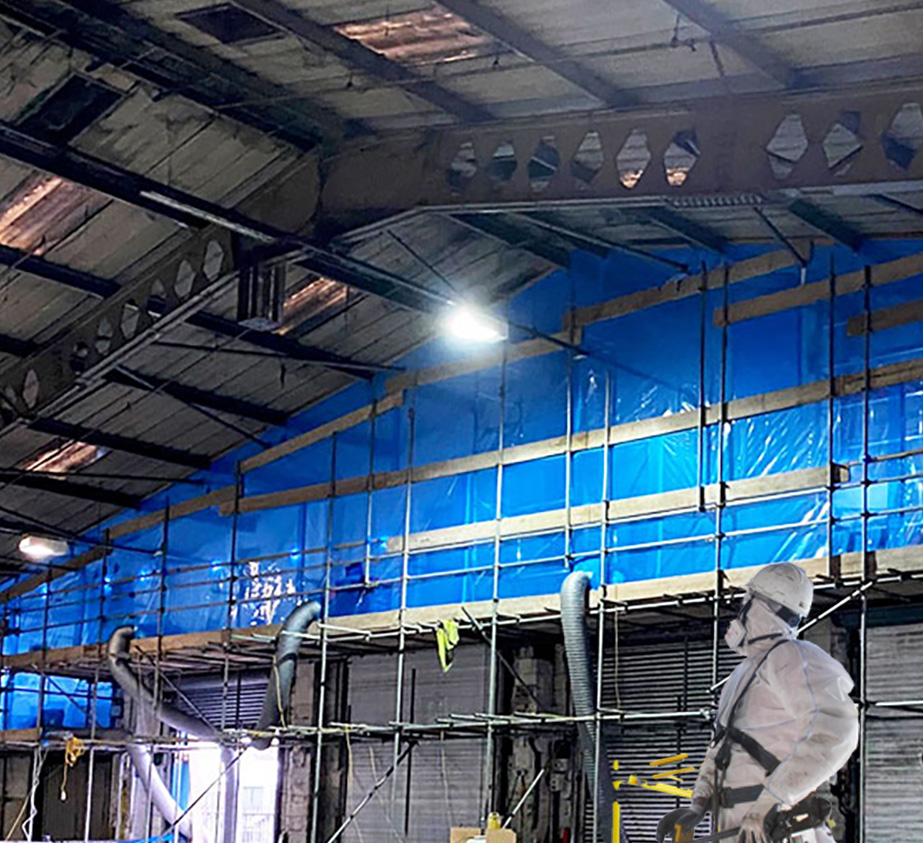
- Hire a qualified abatement professional. Asbestos removal calls for containment, negative air pressure, proper protective equipment, and licensed disposal. This is not a weekend project, and doing it wrong spreads fibers through the whole house.
- Get clearance, then rebuild. Once the material is removed and the area is cleared, the restoration or renovation can move forward safely.
Why This Matters for Storm and Fire Damage
Asbestos is not only a remodeling issue. When a monsoon soaks a wall, a pipe fails behind old plaster, or a fire damages an older Yuma home, the restoration work itself can disturb asbestos-containing materials. That is why we check for it before we tear anything out during water damage or fire damage restoration on older homes. Skipping that step puts your family and our crew at risk.
Aquasafe Restoration has served Yuma County for more than 20 years. We are a Certified AHERA Asbestos Contractor and Supervisor, licensed in Arizona, and compliant with ADEQ regulations. If you are dealing with asbestos in an older Yuma home, whether from a remodel or storm damage, call (928) 750-1670 for a straight answer on what your project needs.