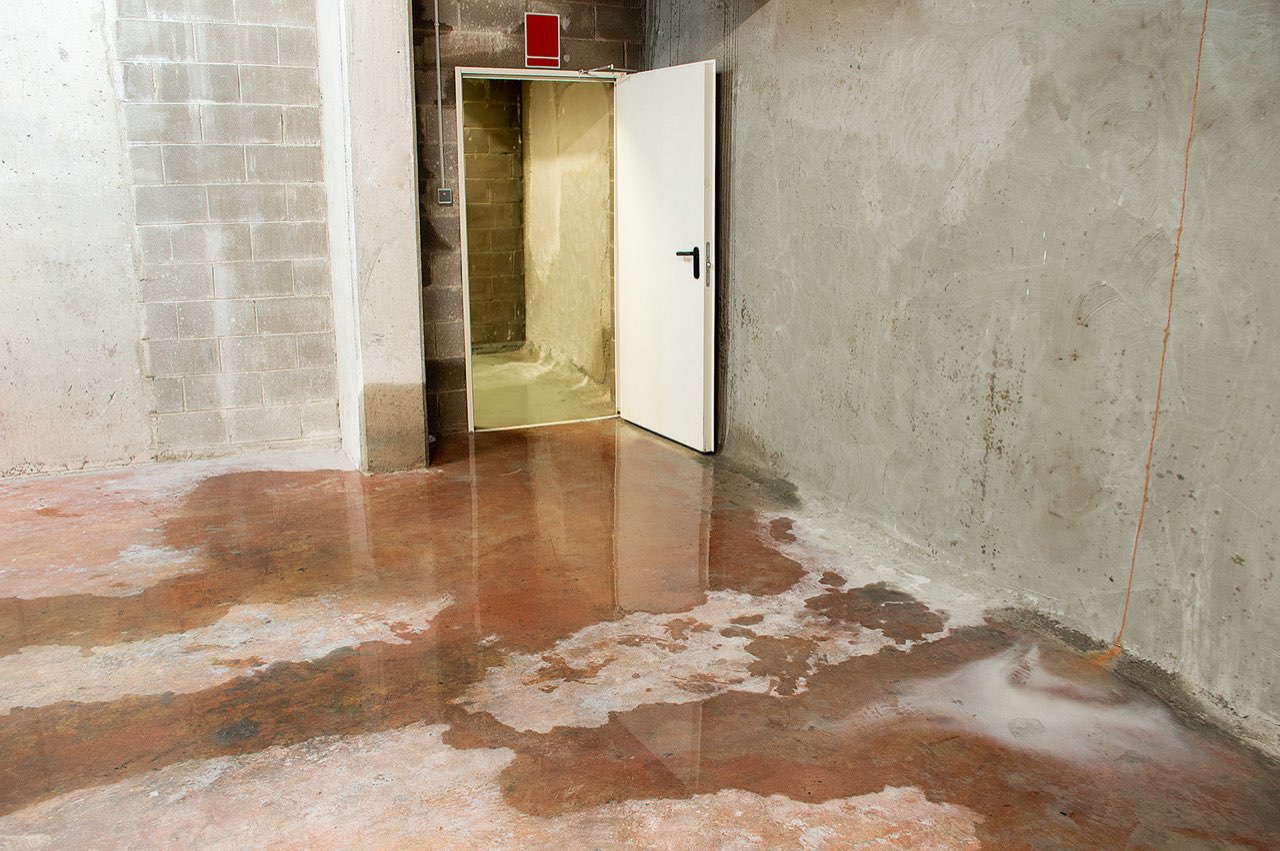
Flood damage in a Yuma home follows a fairly predictable order, and it is not the order people expect. Almost every home here sits on a concrete slab with no basement, so there is no lower level for water to collect in. It comes in at grade, spreads across the floor, and then climbs.
For flood damage cleanup anywhere in Yuma County, call Aquasafe Restoration at (928) 750-1670. We answer 24 hours a day.
Flooring and Baseboard Go First
Water reaches the floor covering immediately and gets underneath it within minutes. Carpet and pad soak through. On tile and vinyl the water travels under the surface through the adhesive, which is why a floor can look intact while the bond beneath it is already failing.
Baseboard sits directly in the path and wicks water upward into the wall behind it. This is usually the first visible sign of how far the water actually spread, because baseboard stains at the ends of a run long after the standing water is gone.
Tack strip, subfloor adhesive and the bottom plate of the wall framing all hold moisture at this level too. None of it is visible from the room, and all of it has to be dried or removed.
Drywall Wicks Higher Than the Water Line
Drywall behaves like a sponge standing on end. Water that pooled two inches deep can migrate a foot or more up the sheet, and the paper facing carries it further than the gypsum core does.
This is why professional cuts are made well above the visible line, typically at least 12 inches above the highest point the water reached on a contaminated loss. Cutting at the stain line leaves wet material inside the wall, and wet material inside a closed wall cavity in Yuma summer heat is the single most reliable way to grow mold.
Insulation in the affected cavity comes out with the drywall. It holds water, it dries slowly, and it is cheap to replace compared to opening the wall a second time.
Mold Starts Before the Water Is Gone
Mold can establish within 24 to 48 hours of water exposure. Yuma’s heat accelerates that rather than slowing it, and a home that has been closed up has no air movement to help.
The timeline matters most in seasonal properties. A home in Fortuna Foothills that took on water in July and was not opened until October is not primarily a flood job by the time anyone sees it. It is a mold remediation job with flood damage underneath, and the scope changes accordingly.
Contamination Turns Salvage Into Removal
Monsoon flood water is Category 3. It has crossed open desert, run through a wash, and picked up sediment, agricultural chemicals and street runoff before reaching your door. That contamination decides what can be kept.
- Removed: carpet and pad, insulation, drywall below the cut line, particle board, upholstered furniture and mattresses that made contact
- Cleaned and kept: tile, sealed concrete, finished wood, metal, plastic, most hard-surface furniture
- Judged individually: documents, electronics, and anything with sentimental value, which we pack out and assess rather than discard on site
Electrical, Appliances and the Things at Outlet Height
Standard outlets sit roughly 12 to 18 inches off the floor, which puts them within reach of a moderate flood. Water in an outlet box or a wall switch is a safety problem before it is a repair problem, which is why cutting power to affected areas comes before anything else.
Appliances that sat in flood water need evaluation rather than assumption. Water heaters, HVAC air handlers on a slab, and washer and dryer units all have components at floor level that corrode quietly after the fact.
The Damage People Find Six Months Later
The costly flood damage is usually the part that was never dried properly. It shows up as flooring adhesive letting go along one wall, cabinet bases swelling and separating, a musty smell with no visible source, and corrosion at outlet height.
Every one of those traces back to the same decision: drying that stopped when surfaces felt dry instead of when moisture readings confirmed the structure was dry. It is the reason we log readings daily and leave equipment running until the numbers say so, not until the room looks finished.
If your home has taken on water, call (928) 750-1670. We serve Yuma, Fortuna Foothills, Somerton, San Luis, Wellton and Gadsden, with a crew on site within 60 minutes.